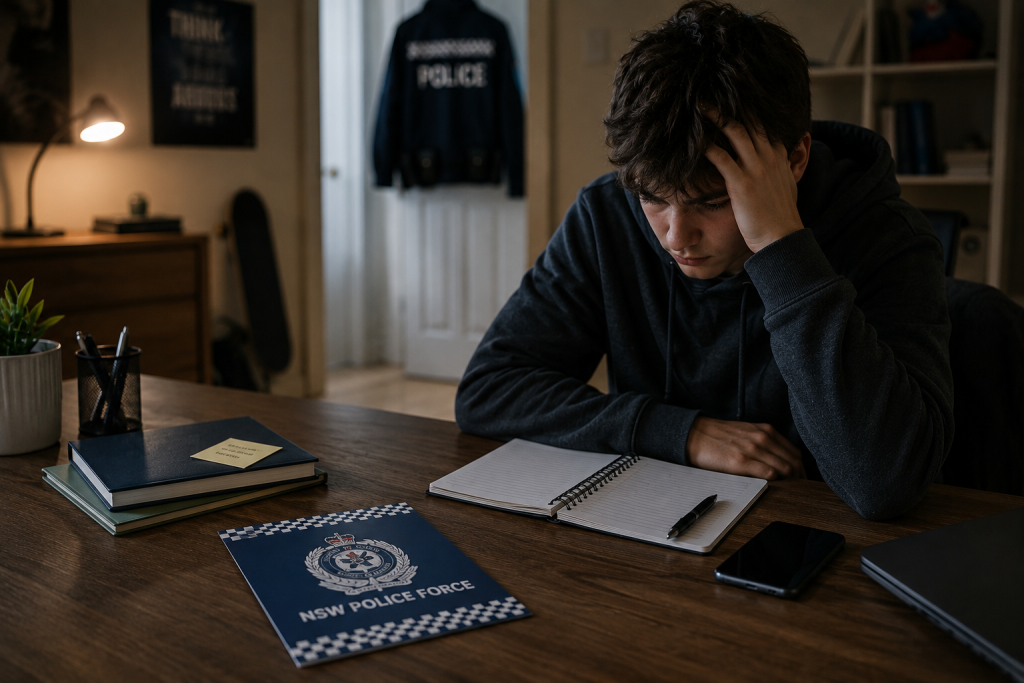
We have had clients ring us in distress. Their teenager or young adult child is at the Police station.
The Police want their child to make a statement.
What should they do? Should they talk?
This is where the RIGHT TO SILENCE comes in.
Your children should not make a statement.
They should have the benefit of receiving legal advice.
Yes, you must always cooperate with Police, but you can cooperate and still exercise your right to silence.
Not saying anything can help innocent people like your teenager from accidentally implicating themselves in whatever happened because they are confused or stressed.
You should get a lawyer straight away who will talk to the Police on your behalf.
RIGHT TO SILENCE
In New South Wales, the right to silence is a fundamental common law protection where you do not have to provide a statement or participate in an interview, especially a record of interview.
This often confuses clients.
You have been told that you must obey the Police and that the Police are there to help you.
So why would you not give a statement when they ask?
Yes, you must always cooperate with the Police.
You or your child can still exercise your right to silence.
WHAT CAN GO WRONG?
It is only natural that people want to explain what they saw happen, or their side of things. However, just like Instagram and Tik Tok anything they say whether recorded or written down, can be used against them.
It does not mean that they or in your case, your children have done anything wrong.
What we see so often happen, is that at a later time, the Police may want to do another interview to clarify what was said which may not be in the client’s best interests.
It is not that they are dishonest, but young people may not understand the system and be pent up with nerves at just being at the Police station.
What most people do not realise is that they may say things when they are stressed that could incriminate them later.
No, they have not done anything wrong, but they may say something at a later date, when they have had time to sort out their jumbled thoughts, which contradicts what they said in their original interview.
This may result in them having to go in again to make another statement or even to them being charged with a criminal offence.
NO OBLIGATION TO GIVE AN INTERVIEW
There is no obligation to have a Police interview let alone a second interview.
It is our experience that an interview does not help the client. More often than not, it gives Police a basis to establish a charge.
This is especially the case when a family dispute is involved and accusations are made against one former partner, often including the children.
You can check out our article Family Violence and AVOs/ADVOs
PITFALLS
“I didn’t lie”
Many people believe that since they have done nothing wrong and didn’t lie, or have nothing to hide, then it is OK to make a statement.
The problem is that the legal system is complex and innocent statements can be misinterpreted in different contexts or little details in them can be used against the person making the statement.
“Won’t I look guilty if I don’t talk?”
The Police know the system. They understand that not talking is a legally protected right and it cannot be used against you.
If you have a lawyer, that also provides an explanation that you are just exercising your rights and not being uncooperative.
There can be no implication of any guilt.
GET A LAWYER
Exercising their right to silence and getting a lawyer, prevents innocent people from accidentally implicating themselves due to confusion or stress. The lawyer knows the legal system and the legal implications of what is said and done. They can protect clients from making statements that can be misinterpreted and allow the clients time to settle their thoughts.
If, at some point, you or your child has to make a statement, your lawyer can be present when the statement is made and ensure that your rights are protected.
Additionally, there are extra safeguards for children under the age of 18 years.
In fact, a young person does not have to go to the police station unless they have been arrested.
It is important to tell children to call their parents first. Then parents can talk to a lawyer and get advice about what to do.
If the police have arrested your child, then, not only do the police have to tell your child that they do not have to talk or make a statement, they should also advise that the young person should have a support person with them.
SUPPORT PERSON
A support person is not a lawyer. A support person is there to provide emotional support and to ensure that the young person’s rights are respected.
Although a support person is not a lawyer, they understand the rights of the young person and can ensure that the young person knows that they do not have to give a statement.
WHAT SHOULD YOU OR YOUR CHILD DO AND SAY?
You must always be polite. You must always cooperate with Police.
Even when exercising your right to silence you must still provide the Police with:
- Your full name
- Your home address
- If driving, your driver’s licence and whether you own the vehicle
Refusing to provide your name and address is an offence.
Politely tell the Police that you are exercising your right to silence and do not wish to be interviewed.
You should also request a lawyer.
YOU SHOULD NOT FACE THIS ALONE
Whether as a teenager or an adult, you should not have to face this alone.
Not only can a lawyer help you navigate the immediate situation they can also review any evidence or allegations that may have been made and if necessary, prepare a proper and measured response and defence rather than the client speaking prematurely.
It helps you to get back some control over your situation.
WE ARE HERE TO HELP YOU AND ENSURE A FAIR OUTCOME
The right to silence and to have legal representation are important rights that safeguard the fairness and integrity of the criminal justice legal system.
It is a safeguard against misunderstandings, misinterpretation of otherwise innocent situations and human memory lapses and perceptions.
You need someone with experience of the legal system to guide you.
YOU NEED TO TALK TO A LAWYER AS SOON AS POSSIBLE
Please contact us.
This article is for information only and should not be relied on for legal advice.